Basics


Info Download

Advanced

v/v
V
V

Plot Download

Original entertainment content refers to unique, creative, and engaging media content that is produced in-house or acquired through exclusive deals. This can include movies, TV shows, music, podcasts, and even video games. The key characteristic of original content is that it is not derivative or licensed from another source, making it a fresh and innovative offering for audiences.

Popular media, on the other hand, refers to widely recognized and consumed media content that has mass appeal. This can include blockbuster movies, hit TV shows, trending music, and viral social media challenges. Popular media often has a broad reach and is frequently referenced or parodied in popular culture.

The combination of original entertainment content and popular media is a potent formula for success in today's entertainment industry. By leveraging the benefits of both, creators can produce innovative, engaging, and widely appealing content that resonates with audiences. As the entertainment landscape continues to evolve, we can expect to see more exciting collaborations and fusions of original content and popular media.

In today's digital age, the entertainment industry is constantly evolving, with new platforms and formats emerging every day. Two key players in this industry are original entertainment content and popular media. While they may seem like distinct entities, combining them can lead to a powerful synergy that captivates audiences and leaves a lasting impact. In this write-up, we'll explore the benefits of coupling original entertainment content with popular media and how this fusion can revolutionize the way we consume entertainment.
Disclaimer: This tool is provided for educational and illustrative purposes only. No guarantee is made regarding accuracy, suitability, or performance. Use at your own risk. - Copyright: ufelectronics.eu / Andreas Dyhrberg

×
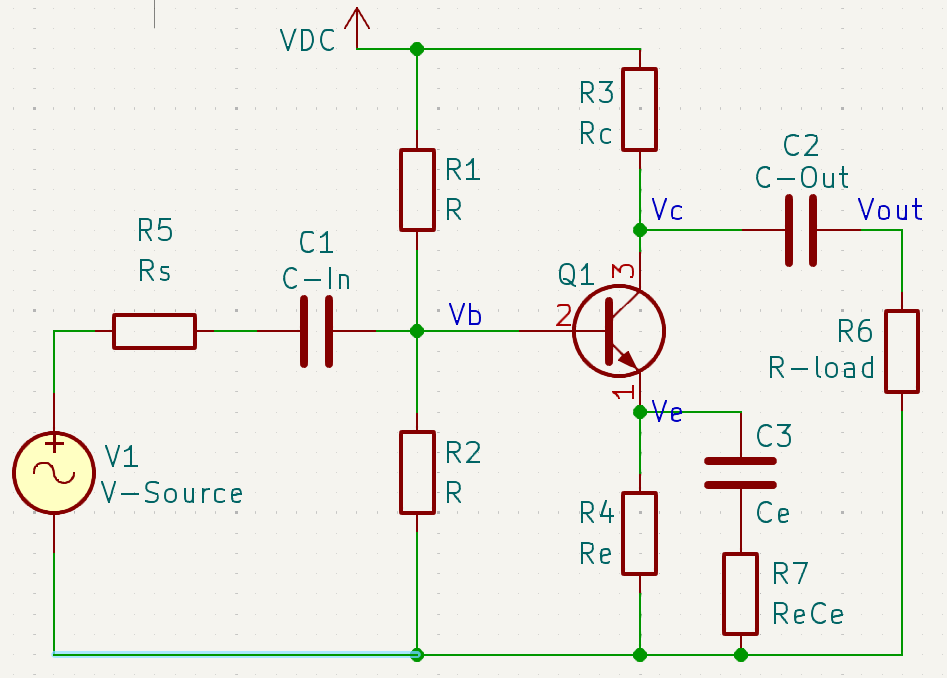
Amplifier Schematic
×

There are different ways to calculate an amplifier, depending on what you want to achieve.

Maybe you want to achieve a certain gain, as far as possible (classic mode). Or you have a low Vcc to respect (modern mode). Or you work with analog audio amps (symmetry mode).

Depending on what you want to achieve and the way of calculating it. Some fields might become dependent on others, or the other way around.

Your above choise makes some input fields available for manipulation, while hiding others.


🎯 1. Target Gain (Av) — "Classic mode" New Couple XXX -2024- Www.10xflix.com Original... BEST

You care about how much your amplifier multiplies the input signal.

Set desired voltage gain and Rc voltage drop. Best for learning and simple amplifiers.

You say: “I want a gain of 10.”
The app adjusts resistors to try and match that.
You must give Av and Vrc (the voltage dropped across Rc).

Best for common emitter amplifiers.

✅ Default choice for most beginners and educational use. Popular media, on the other hand, refers to


⚡ 2. Target Emitter Voltage (Ve) — "Modern mode"

You care about setting a healthy DC bias point.

Prioritize stable biasing via Ve. Useful for low-voltage circuits or precision designs.

You say: “I want Ve = 0.5 V, to keep the transistor out of trouble.”
This makes sure your transistor stays in active mode.
Gain becomes whatever it turns out to be.

Ideal for common emitter amplifiers when the goal is to ensure proper biasing for low-voltage or precision circuits, and it’s also used in class AB amplifiers to prevent distortion In this write-up

✅ Useful in low-voltage designs (e.g., 3.3V systems).


🧭 3. Target Collector Voltage (Vc) — "Symmetry mode"

You want to place the collector in the middle of the power rail.

Target Vc = Vcc/2 for maximum signal swing. Great for audio and analog signals.

You say: “Make Vc = Vcc/2” for maximum swing.
Useful for analog audio amps or symmetrical headroom.
Gain and Ve are outcomes.

Best for common collector amplifiers and class AB amplifiers.

✅ Best for signal integrity.

Xxx -2024- Www.10xflix.com Original... Best - New Couple

Original entertainment content refers to unique, creative, and engaging media content that is produced in-house or acquired through exclusive deals. This can include movies, TV shows, music, podcasts, and even video games. The key characteristic of original content is that it is not derivative or licensed from another source, making it a fresh and innovative offering for audiences.

Popular media, on the other hand, refers to widely recognized and consumed media content that has mass appeal. This can include blockbuster movies, hit TV shows, trending music, and viral social media challenges. Popular media often has a broad reach and is frequently referenced or parodied in popular culture.

The combination of original entertainment content and popular media is a potent formula for success in today's entertainment industry. By leveraging the benefits of both, creators can produce innovative, engaging, and widely appealing content that resonates with audiences. As the entertainment landscape continues to evolve, we can expect to see more exciting collaborations and fusions of original content and popular media.

In today's digital age, the entertainment industry is constantly evolving, with new platforms and formats emerging every day. Two key players in this industry are original entertainment content and popular media. While they may seem like distinct entities, combining them can lead to a powerful synergy that captivates audiences and leaves a lasting impact. In this write-up, we'll explore the benefits of coupling original entertainment content with popular media and how this fusion can revolutionize the way we consume entertainment.