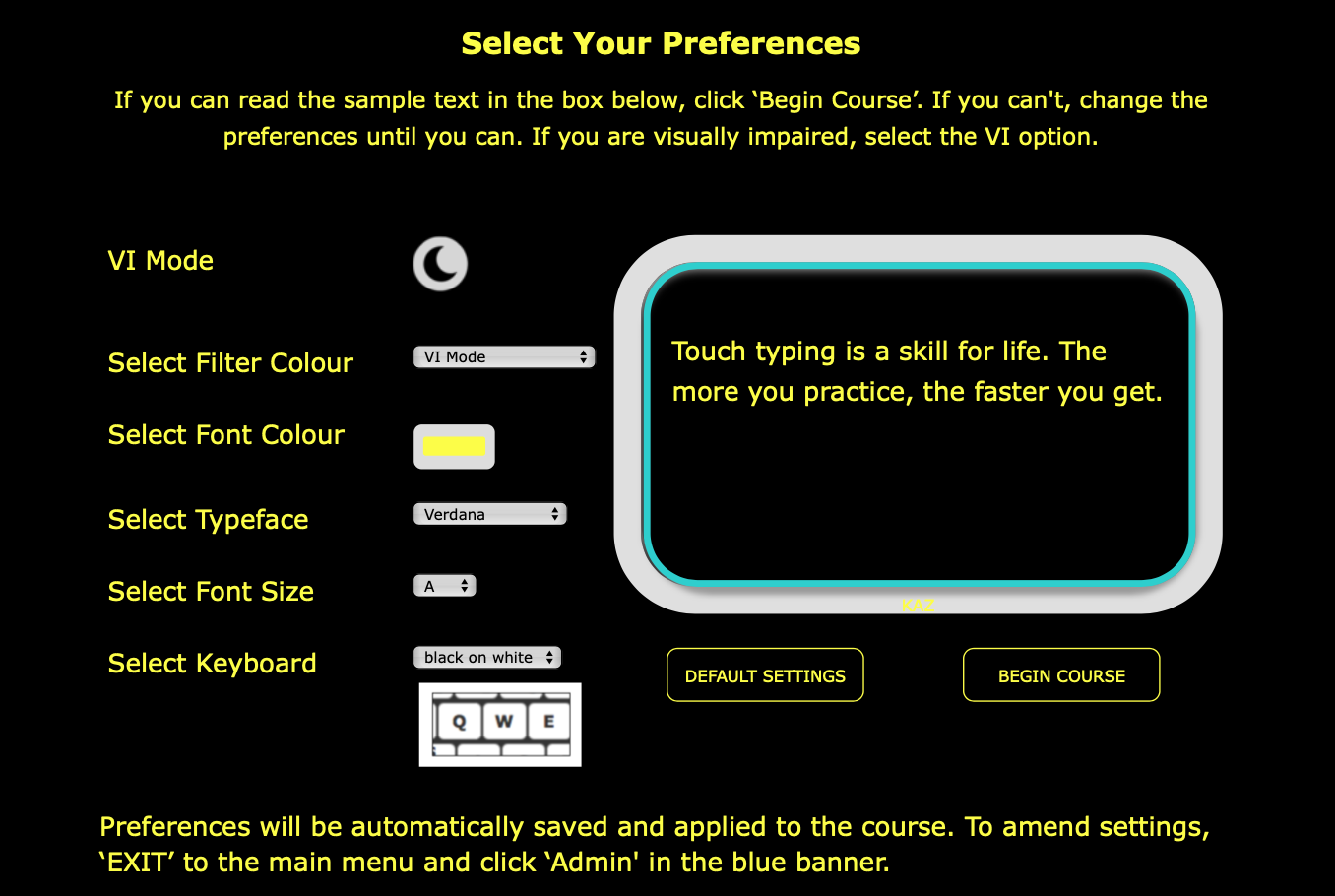
Touch Typing Software for the Visually Impaired & Blind
Specialised edition developed with advice and guidance from the
Thomas Pocklington Trust
Compatible with:
JAWS and other screen readers
Dolphin SuperNova and other magnification software/hardware
Google and other captioning software
Learning to touch type is considered one of the most beneficial skills for visually impaired and blind individuals. This is because it allows them to transfer their thoughts easily and automatically onto a screen. It provides them with an invaluable tool and asset for independent working and communicating.
Learning to touch type at any age can dramatically boost confidence, self-belief and independence. However, teaching learners with visual impairment at an early age can drastically transform their experience whilst at school and in FE/HE. It puts them on a more even standing with their sighted peers and opens doors to new career opportunities.
Achieving muscle memory and automaticity when touch typing increases efficiency and productivity. However, most importantly, it frees the conscious mind to concentrate on planning, composing, processing and editing, greatly improving the quality of the work produced.
The KAZ Course
The KAZ course is a tutorial and is designed to be used independently or with minimum supervision. However, a structured lesson plan is available in Administrators’ admin-panels should they wish to teach the course during lessons.
The course consists of five modules:
Module 1– Flying Start - explains how the course works, teaches the home-row keys, correct posture whilst sitting at the keyboard, and explains the meaning, causes, signs, symptoms and preventative measures for Repetitive Strain Injury.
Module 2– The Basics - teaches the A-Z keys using KAZ’s five scientifically structured and trademarked phrases.
Module 3– Just Do It - offers additional exercises and challenge modules to help develop ‘muscle memory’, automaticity and help ingrain spelling.
Module 4– And The Rest - teaches punctuation and the number keys.
Module 5– SpeedBuilder - offers daily practice to increase speed and accuracy.
The allure of free movies has long been a tantalizing prospect for film enthusiasts. With the rise of online streaming platforms, accessing a vast library of movies at no cost has become increasingly possible. One such platform that has garnered attention in recent years is Movie6, a website offering a wide range of free movies. But what makes Movie6 an interesting case study is the complex interplay between the appeal of free entertainment, the legal and ethical implications of such platforms, and the evolving landscape of digital content consumption.
The cat-and-mouse game between free movie streaming sites and the entertainment industry is likely to continue. As technology evolves and more robust content protection measures are implemented, these sites adapt and find new ways to circumvent regulations. However, there's also a growing recognition of the value of accessible, affordable entertainment. Perhaps the future lies in hybrid models that balance the interests of content creators with the desires of consumers for affordable, accessible entertainment.
The existence and popularity of platforms like Movie6 also reflect broader shifts in consumer behavior and the digital transformation of content consumption. Traditional television and cinema are no longer the only ways to enjoy movies. The rise of streaming giants like Netflix, Hulu, and Disney+ has revolutionized the way people watch movies and TV shows, offering vast libraries of content for a monthly fee. In response, free, ad-supported streaming services have emerged as an alternative, catering to viewers who are sensitive to cost or prefer not to commit to subscription services.
Moreover, the sustainability and safety of using free movie streaming sites like Movie6 are questionable. Many of these sites operate in a legal gray area, and their longevity can be unpredictable. They might shut down one day and resurface under a different domain the next, making it difficult for users to keep track. Furthermore, these sites can sometimes expose users to malware, pop-up ads, and other cybersecurity risks. The tradeoff for free entertainment might be higher than users are willing to accept, especially when considering the potential risks to personal data and device security.
In conclusion, Movie6 and similar platforms represent a complex intersection of technology, consumer demand, and the challenges of intellectual property rights in the digital age. While they offer an appealing proposition for those looking to enjoy movies at no cost, they also pose significant legal, ethical, and safety concerns. As the digital landscape continues to evolve, finding a balance that respects the rights of creators while meeting the desires of consumers will be crucial. The allure of free movies is undeniable, but it's up to each individual to consider the broader implications of how they choose to enjoy their favorite films.
At first glance, Movie6 and similar platforms seem like a dream come true for movie buffs on a budget. Who wouldn't want to watch the latest blockbusters or classic films without the hefty price tag of a subscription service or a trip to the cinema? The convenience and accessibility of such sites are undeniably appealing. Users can browse through a diverse catalog of movies, genres, and eras, all from the comfort of their own homes. This democratization of access to entertainment can be seen as a positive force, bringing cinema to a wider audience.
However, the operations of Movie6 and similar sites raise significant legal and ethical questions. The primary concern revolves around copyright infringement. Most movies available on such platforms are uploaded without the consent of the copyright holders, which constitutes a clear violation of intellectual property rights. This not only deprives creators and rights holders of revenue but also undermines the traditional business models of the film industry. The legal ambiguity surrounding these sites often puts users in a gray area, as they may not fully understand the implications of accessing copyrighted material for free.
Movie6 Free Movies May 2026
The allure of free movies has long been a tantalizing prospect for film enthusiasts. With the rise of online streaming platforms, accessing a vast library of movies at no cost has become increasingly possible. One such platform that has garnered attention in recent years is Movie6, a website offering a wide range of free movies. But what makes Movie6 an interesting case study is the complex interplay between the appeal of free entertainment, the legal and ethical implications of such platforms, and the evolving landscape of digital content consumption.
The cat-and-mouse game between free movie streaming sites and the entertainment industry is likely to continue. As technology evolves and more robust content protection measures are implemented, these sites adapt and find new ways to circumvent regulations. However, there's also a growing recognition of the value of accessible, affordable entertainment. Perhaps the future lies in hybrid models that balance the interests of content creators with the desires of consumers for affordable, accessible entertainment. movie6 free movies
The existence and popularity of platforms like Movie6 also reflect broader shifts in consumer behavior and the digital transformation of content consumption. Traditional television and cinema are no longer the only ways to enjoy movies. The rise of streaming giants like Netflix, Hulu, and Disney+ has revolutionized the way people watch movies and TV shows, offering vast libraries of content for a monthly fee. In response, free, ad-supported streaming services have emerged as an alternative, catering to viewers who are sensitive to cost or prefer not to commit to subscription services. The allure of free movies has long been
Moreover, the sustainability and safety of using free movie streaming sites like Movie6 are questionable. Many of these sites operate in a legal gray area, and their longevity can be unpredictable. They might shut down one day and resurface under a different domain the next, making it difficult for users to keep track. Furthermore, these sites can sometimes expose users to malware, pop-up ads, and other cybersecurity risks. The tradeoff for free entertainment might be higher than users are willing to accept, especially when considering the potential risks to personal data and device security. But what makes Movie6 an interesting case study
In conclusion, Movie6 and similar platforms represent a complex intersection of technology, consumer demand, and the challenges of intellectual property rights in the digital age. While they offer an appealing proposition for those looking to enjoy movies at no cost, they also pose significant legal, ethical, and safety concerns. As the digital landscape continues to evolve, finding a balance that respects the rights of creators while meeting the desires of consumers will be crucial. The allure of free movies is undeniable, but it's up to each individual to consider the broader implications of how they choose to enjoy their favorite films.
At first glance, Movie6 and similar platforms seem like a dream come true for movie buffs on a budget. Who wouldn't want to watch the latest blockbusters or classic films without the hefty price tag of a subscription service or a trip to the cinema? The convenience and accessibility of such sites are undeniably appealing. Users can browse through a diverse catalog of movies, genres, and eras, all from the comfort of their own homes. This democratization of access to entertainment can be seen as a positive force, bringing cinema to a wider audience.
However, the operations of Movie6 and similar sites raise significant legal and ethical questions. The primary concern revolves around copyright infringement. Most movies available on such platforms are uploaded without the consent of the copyright holders, which constitutes a clear violation of intellectual property rights. This not only deprives creators and rights holders of revenue but also undermines the traditional business models of the film industry. The legal ambiguity surrounding these sites often puts users in a gray area, as they may not fully understand the implications of accessing copyrighted material for free.
Copyright KAZ Type Limited 2025. KAZ is a registered trade mark of KAZ Type Limited.
Developed by : STERNIC Pvt. Ltd.